Kaudulla Safari vs Yala Safari: Complete Comparison Guide for Sri Lanka Wildlife
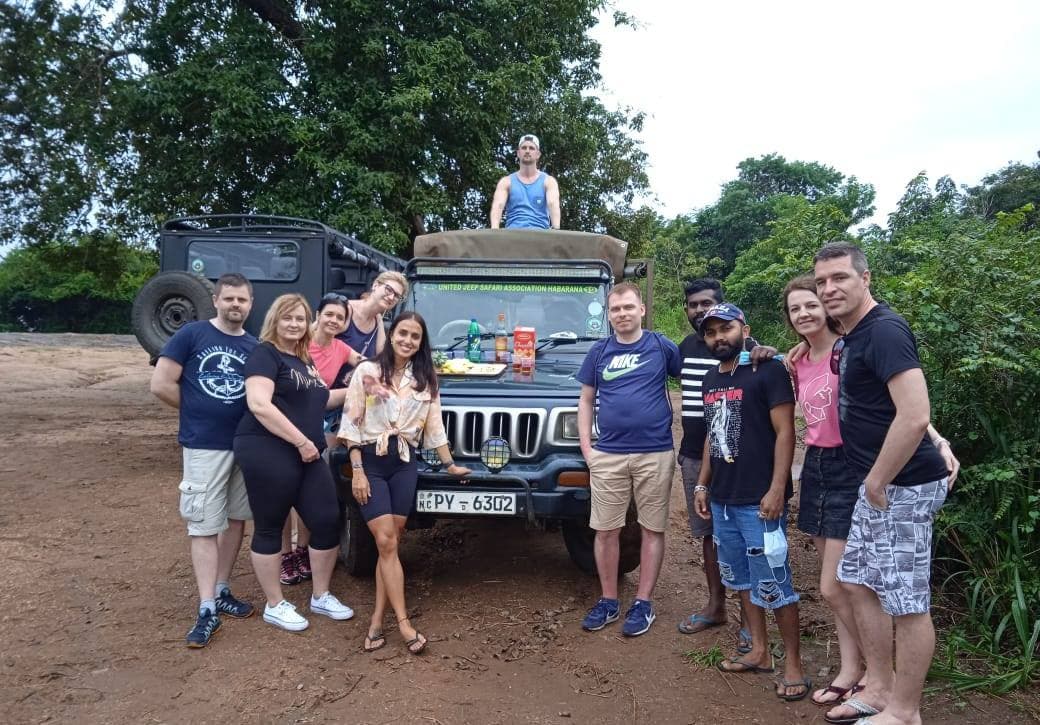
Kaudulla and Yala National Parks represent two fundamentally different wildlife safari experiences in Sri Lanka, each excelling in distinct dimensions that appeal to different traveler priorities and wildlife interests. While both qualify as world-class safari destinations protecting remarkable biodiversity, comparing them involves contrasting not just different parks but different safari philosophies and wildlife priorities. Kaudulla, located in the North Central Province's dry zone, revolves around the spectacular seasonal elephant gathering phenomenon where hundreds of Asian elephants congregate around the ancient Kaudulla Tank during dry months, creating one of the world's premier elephant viewing destinations within intimate, relatively uncrowded settings. Yala, positioned along Sri Lanka's southeastern coast, boasts the world's highest leopard density offering unparalleled opportunities to observe these elusive big cats, while also protecting diverse ecosystems ranging from coastal scrubland to monsoon forests supporting sloth bears, crocodiles, and countless other species across a park more than three times Kaudulla's size. The question isn't which park is objectively "better"—both excel within their specialties—but rather which park's strengths align with your specific wildlife interests, tolerance for tourism crowds, budget constraints, available time, and how each fits within your broader Sri Lankan itinerary. This comprehensive comparison examines every relevant dimension including wildlife diversity and signature species, seasonal timing and climate patterns, visitor experience quality and crowd management, accessibility and logistics, costs and value, integration with other destinations, and ultimately provides decision-making frameworks helping you choose the safari experience best matching your priorities or potentially experience both parks' unique offerings across extended Sri Lankan adventures.
Understanding the Fundamental Differences
Before diving into detailed comparisons, recognizing the core philosophical and ecological differences between these parks helps frame specific dimension analyses:
Kaudulla National Park represents a specialized elephant sanctuary where the primary draw centers on witnessing massive elephant gatherings—a predictable, seasonal phenomenon creating virtually guaranteed close-range elephant encounters during peak months. The park's compact size (6,900 hectares), manageable visitor numbers, and focus on a single dramatic wildlife spectacle creates an accessible, concentrated safari experience ideal for travelers prioritizing elephants, peaceful wilderness immersion, and high wildlife viewing success rates within limited time windows.
Yala National Park functions as a comprehensive wildlife reserve protecting diverse ecosystems across its massive 97,880 hectares (Block I alone covers 14,101 hectares—more than twice Kaudulla's total size), with the world-famous leopard population serving as primary attraction while supporting extraordinary species diversity. Yala delivers the classic "big game safari" experience where you might encounter leopards, elephants, sloth bears, crocodiles, and countless other species across varied landscapes during extended full-day excursions. The park's larger scale, higher visitor numbers, and broader wildlife focus creates more unpredictable but potentially more diverse safari experiences.
Understanding this fundamental distinction—specialized elephant sanctuary versus comprehensive wildlife reserve—provides context for all subsequent comparison dimensions. You're not comparing similar parks that happen to have different animals; you're comparing fundamentally different safari philosophies and experience types.

Wildlife Diversity and Signature Species
The most critical comparison dimension for most travelers involves what wildlife you'll actually see and the relative odds of encountering specific species that motivated your safari interest.
Elephants: Kaudulla's Specialty
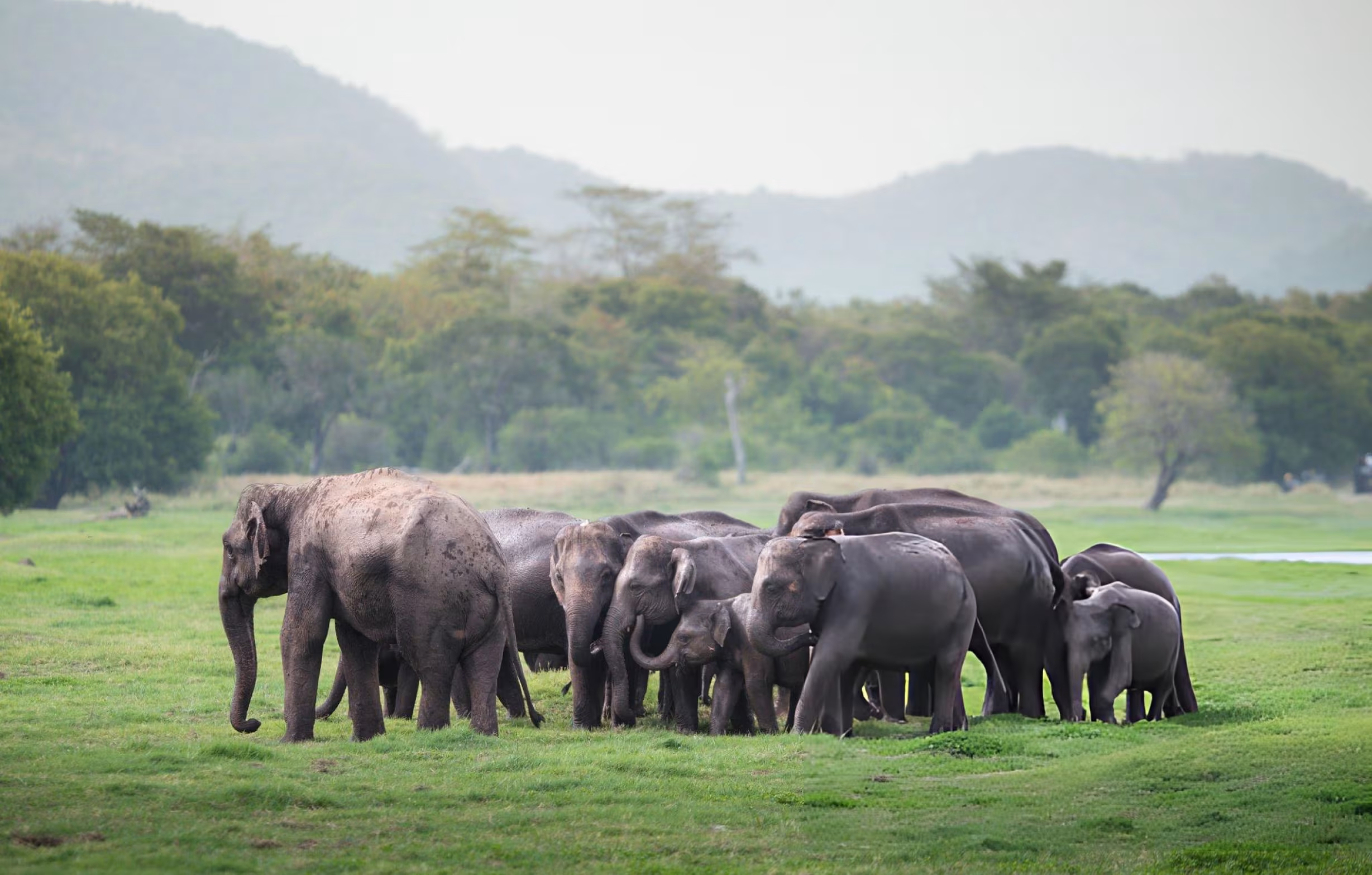
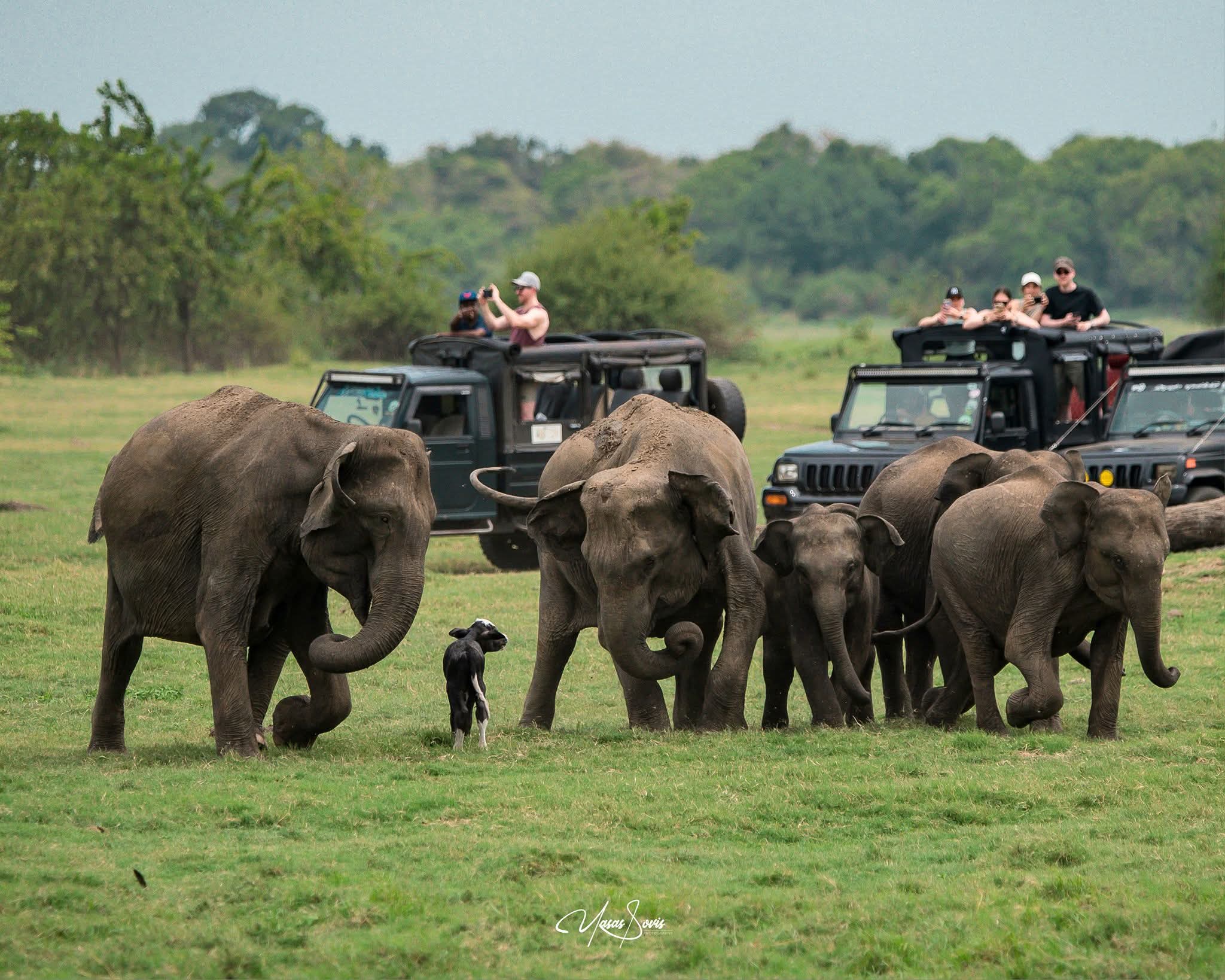
Kaudulla reigns supreme for elephant viewing in Sri Lanka and arguably ranks among the world's best elephant destinations. During peak gathering season (June-September), seeing 100-300+ elephants in single safaris is not just possible but expected—you'd have to be extraordinarily unlucky to visit during this window and not witness substantial elephant congregations. The predictability and scale of these gatherings, combined with relatively close viewing distances (typically 15-30 meters with elephants frequently even closer), creates unparalleled opportunities for observing elephant behavior, family dynamics, social interactions, bathing rituals, feeding behaviors, and mother-calf bonds.
Even during off-peak months, Kaudulla maintains resident elephant populations of 30-80 individuals ensuring reasonable elephant sighting success year-round, though nothing approaching peak season spectacle.
Yala hosts elephant populations estimated at 300-350 individuals park-wide, but they disperse across the massive reserve making individual safari encounters typically involve smaller groups of 5-30 elephants rather than the massive herds characterizing Kaudulla. Elephant sightings at Yala are common but not guaranteed on every safari, and the scale rarely approaches Kaudulla's gathering phenomenon. If elephants are your primary or sole wildlife interest, Kaudulla delivers dramatically superior experiences.
Leopards: Yala's Crown Jewel
Yala National Park boasts the world's highest leopard density with an estimated 40-50 leopards residing in Block I alone—translating to approximately one leopard per 250-350 hectares. This extraordinary density creates the best leopard viewing opportunities anywhere globally, with skilled guides and extensive safari vehicle networks regularly locating and tracking these normally elusive big cats. During dry season (February-July), seeing leopards on Yala safaris transitions from "if you're lucky" to "more likely than not" for full-day excursions, though sightings never reach "guaranteed" status given leopards' solitary, wide-ranging nature.
Most Yala leopard sightings occur at 30-100+ meter distances with cats lounging in trees, walking along roads, or stalking prey through scrubland. Close encounters happen but remain less common than at African parks where habituated populations tolerate vehicles within meters. However, any leopard sighting represents extraordinary wildlife viewing given how notoriously difficult these apex predators are to observe in most contexts.
Kaudulla maintains leopard populations estimated at 5-10 individuals park-wide, resulting in rare, highly opportunistic sightings. Most Kaudulla safaris don't produce leopard encounters, and those that do typically involve brief glimpses of cats disappearing into cover. If leopards rank high on your wildlife bucket list, Yala represents the obvious choice—the leopard viewing opportunity gap between these parks is even more dramatic than the elephant gap, just in opposite direction.
Sloth Bears: Yala's Additional Big Draw
Sri Lankan sloth bears inhabit both parks but appear far more regularly at Yala, particularly during June-July fruiting seasons when bears emerge from dense forest to feed on palu fruit trees. While sloth bear sightings never approach the frequency of leopards or elephants at respective specialist parks, Yala offers reasonable odds (perhaps 20-30% on full-day dry season safaris) of encountering these fascinating, shaggy omnivores.
Kaudulla rarely produces sloth bear sightings (perhaps 5% of safaris, highly opportunistic) due to smaller population size and preferred forest habitat that safari routes don't extensively penetrate. If sloth bears interest you significantly, Yala provides substantially better viewing odds.
Other Mammals: Varied Strengths
Spotted deer (chital), sambar deer, wild boar, and monkeys (toque macaques, gray langurs) appear commonly at both parks in similar densities and frequencies. Neither park offers significant advantages for these common species.
Water buffalo appear more frequently at Kaudulla where the tank and seasonal wetlands provide optimal habitat. Mugger crocodiles bask along Kaudulla Tank shorelines regularly during dry season, while Yala features both mugger crocodiles in inland water bodies and occasional saltwater crocodiles in coastal lagoons, providing slightly more crocodilian diversity.
Yala's larger size and ecosystem diversity supports somewhat greater overall mammal diversity including species rarely or never seen at Kaudulla: fishing cats (extremely rare but present), rusty-spotted cats (Asia's smallest wild cat, occasionally spotted at night), and coastal species like dolphins visible from certain beach access points within the park. However, these represent niche species that most visitors won't prioritize or encounter.

Avian Diversity: Kaudulla's Edge
Bird diversity slightly favors Kaudulla with 160+ recorded species compared to Yala's 215+ species—however, Yala's higher total species count spreads across three times the area and diverse ecosystems, while Kaudulla concentrates its diversity within compact, easily accessible areas.
For practical birdwatching during standard safaris, Kaudulla delivers more concentrated, productive experiences with massive water bird colonies (painted storks, pelicans, storks, herons, egrets) creating spectacular viewing opportunities. The park's habitat diversity concentrates forest birds, grassland species, and water birds within manageable viewing range.
Yala's bird diversity includes unique coastal and scrubland species absent from Kaudulla's inland dry zone habitat, appealing to serious ornithologists seeking comprehensive Sri Lankan species lists. However, the birds spread across massive areas requiring more time and effort locating them.
For typical safari visitors interested in enjoying birds opportunistically rather than dedicated birding, Kaudulla provides more immediately rewarding avian experiences. For serious birders building comprehensive species lists, Yala contributes more specialized species despite requiring more effort locating them.
Seasonal Timing and Climate Considerations
When you travel dramatically affects both parks' wildlife viewing success and safari experience quality, with different optimal windows based on each park's ecological patterns.
Kaudulla's Peak Seasons
Prime elephant gathering season (June-September, peaking August-early September) represents the absolute optimal window for Kaudulla visits when elephant numbers reach maximum concentrations and viewing virtually guaranteed. This dry season period delivers consistently sunny weather, clear visibility, comfortable temperatures, and peak wildlife activity.
Shoulder seasons (May, October-November) maintain decent elephant numbers (50-120 individuals) with lower visitor numbers and reduced accommodation costs, offering good value for travelers with flexible schedules willing to accept smaller gatherings for quieter experiences.
Off-peak wet season (December-April) sees elephant populations disperse and monsoon rains affect safari conditions, though resident populations (30-80 elephants) still provide reasonable viewing. This period works for travelers specifically interested in birdwatching (migratory species present) or seeking budget experiences understanding elephant spectacle won't rival peak season.
Kaudulla's climate features pronounced dry season (May-September) with minimal rainfall and hot temperatures (32-36°C days), transitioning to wetter conditions (October-January) with regular afternoon thunderstorms and slightly cooler temperatures (28-32°C). The park essentially "closes" during wettest months (November-December) in the sense that elephant gatherings disperse, though safaris continue operating.
Yala's Peak Seasons and Closure
Yala's optimal season for leopard viewing runs February through July, coinciding with the driest months when water scarcity concentrates wildlife around limited sources, vegetation thins increasing visibility, and leopards become more active and visible. May-June represent absolute peak leopard viewing months though also coincide with intense heat (35-38°C).
September through January sees Yala's Block I (the primary tourist area) experience various closures for different reasons: September-October represents transition to wet season with some operational limitations, while December-January (exact dates vary annually) Block I closes completely for vegetation regeneration and reducing tourism pressure. This annual closure significantly impacts travel planning—you simply cannot visit Yala Block I during closure months. Other blocks remain open but receive minimal tourism infrastructure and guide attention.
Yala's climate features extreme dry season (February-July) with scorching temperatures, virtually no rain, and arid landscapes, contrasting sharply with wet season (October-January) bringing heavy downpours, lush greenery, and challenging safari conditions with muddy tracks and reduced wildlife visibility.
The annual closure represents the most critical timing consideration—if your Sri Lankan travel dates fall during Yala's closure, the Kaudulla vs Yala decision is made for you. Conversely, if traveling during Yala's optimal February-July window but outside Kaudulla's June-September gathering peak, Yala becomes more attractive as elephant viewing at Kaudulla will be modest.

Visitor Experience: Crowds, Atmosphere, and Safari Character
Beyond what wildlife you see, how you experience safaris varies significantly between these parks in ways that meaningfully affect trip satisfaction.
Visitor Density and Crowds
Yala ranks as Sri Lanka's most visited national park, attracting massive tourist numbers particularly during peak season (February-July) and especially on weekends and holidays. During busy periods, Block I can host 200-300+ safari vehicles simultaneously, creating traffic jams around popular leopard sighting locations where 20-30 jeeps converge competing for viewing and photographic positions. This crowding reaches peak intensity during February-June when both leopard viewing is optimal and school holidays/international tourist high season coincide.
The extensive vehicle presence transforms what should be wilderness experiences into something approaching theme park atmospheres during worst moments—engines running, radios crackling with leopard location updates, vehicles jockeying for position. Serious wildlife photographers find this environment incredibly frustrating as clean shots excluding other vehicles become nearly impossible, while nature lovers seeking peaceful immersion find the constant human presence deeply compromising to the experience quality.
However, Yala's massive size means the crowding concentrates primarily around known leopard territories and popular loops, with extensive areas of the park seeing far fewer vehicles. Full-day safaris allowing exploration beyond the main tourist circuits can provide more solitary experiences, particularly early morning or late afternoon when many day-visitors have departed.
Kaudulla maintains notably lighter visitor numbers with typical peak season days seeing 20-40 safari vehicles park-wide versus Yala's 200-300+. Even during the busiest periods (August-September, weekends), Kaudulla rarely feels genuinely crowded, with space for multiple vehicles to observe elephants without the competitive jostling characterizing Yala's worst moments.
This difference in visitor density represents one of Kaudulla's most significant practical advantages—you're vastly more likely to experience peaceful, intimate wildlife observations maintaining authentic wilderness character. Photographers obtain clean shots without vehicle clutter, and the overall atmosphere remains contemplative rather than circus-like.
For travelers where crowd avoidance is high priority, Kaudulla decisively wins this comparison. For travelers unbothered by busy conditions who prioritize wildlife diversity and leopard opportunities above peaceful ambiance, Yala's crowds become acceptable trade-off for its unique offerings.
Safari Duration and Intensity
Kaudulla safaris typically run 3-4 hours (half-day), which proves adequate given the park's compact size and concentrated elephant viewing areas. The shorter duration suits travelers with limited time, families with young children whose attention spans limit safari endurance, and anyone combining safaris with cultural site visits in the same day.
Full-day Kaudulla safaris (6-8 hours) are available but often feel excessive given the limited area to explore—you'll revisit the same locations multiple times seeking varied elephant behaviors and photographic lighting rather than covering extensive new terrain.
Yala safaris benefit dramatically from full-day durations (6-8 hours, sometimes 10+ hours for serious wildlife enthusiasts) given the park's massive size, diverse ecosystems requiring extensive driving to explore, and the reality that leopard encounters require patience and often come after hours of searching. Half-day Yala safaris (3-4 hours) feel rushed and cover only small fractions of the park, significantly reducing odds of leopard encounters and missing much of the biodiversity.
The longer durations required for optimal Yala experiences demand more physical stamina, greater financial investment (full-day costs significantly more than half-day), and dedicated time allocation that might limit other activities. However, serious wildlife enthusiasts typically consider the extended time worthwhile for comprehensively experiencing Yala's offerings.
Safari Atmosphere and Anticipation
Kaudulla creates relaxed, predictable safari experiences particularly during peak season when elephant sightings are virtually guaranteed within the first hour. The certainty of significant wildlife encounters allows you to relax and enjoy rather than anxiously scanning hoping for sightings. This reliability particularly suits families, first-time safari visitors, or anyone anxious about "wasting" money on safaris that might not deliver wildlife.
Yala generates more suspenseful, uncertain atmosphere where leopard encounters remain probabilities rather than certainties, creating mounting excitement when guides receive radio reports of sightings and subsequently navigate toward locations. This unpredictability creates higher highs (genuine excitement when locating leopards after searching) and lower lows (disappointment if full-day safari produces no leopard despite effort and expense).
Some travelers thrive on Yala's anticipatory tension and treasure leopard sightings more precisely because they aren't guaranteed, while others find the uncertainty stressful and prefer Kaudulla's reliability. This represents subjective preference rather than objective quality difference.

Geographic Location and Accessibility
Where these parks sit geographically within Sri Lanka affects how they integrate into broader itineraries and the logistical effort required reaching them.
Kaudulla Location and Access
Kaudulla sits in the North Central Province approximately 190 kilometers northeast of Colombo and 95 kilometers from Kandy, positioned centrally within Sri Lanka's famous cultural triangle near UNESCO World Heritage sites including Sigiriya Rock Fortress, Polonnaruwa Ancient City, and Dambulla Cave Temple.
The park's cultural triangle location creates natural integration with heritage-focused itineraries—most travelers visiting the region's archaeological sites add Kaudulla elephant safaris as wildlife complement to cultural exploration. The nearby town of Habarana (15 minutes from park entrance) provides extensive accommodation options, safari operators, and serves as convenient base for both wildlife and cultural activities.
Access from Colombo requires 4-5 hour drive or public transport journey to Habarana, then short transfer to park. From Kandy travel time drops to 2.5-3 hours. This central location within prime tourist circuits means most travelers naturally pass through the Kaudulla area during broader Sri Lankan tours, making safari addition logistically simple.
Yala Location and Access
Yala occupies Sri Lanka's southeastern corner approximately 260 kilometers from Colombo and 215 kilometers from Kandy, positioned along the coast far from the cultural triangle and central tourist circuits. The park's primary access town Tissamaharama ("Tissa") sits 5 hours drive from Colombo and 4 hours from Kandy, representing dedicated journey specifically to reach the park.
Yala's remote southeastern location means visiting requires either:
- Dedicated detours specifically to reach the park, adding significant travel time and potentially backtracking if your route doesn't naturally flow through the southeast
- Southern coast integration where Yala becomes convenient stop when traveling Sri Lanka's southern beaches (Mirissa, Tangalle, Galle)—many southern coast visitors add Yala safaris before or after beach time
- Comprehensive circuits where extended Sri Lankan tours (10+ days) cover multiple regions including the southeast
The greater geographic isolation means Yala works best for travelers with:
- Adequate time for extensive Sri Lankan exploration
- Interest in southern region's other attractions (beaches, Galle Fort)
- Willingness to invest travel time specifically for wildlife viewing
- Flexible itineraries accommodating geographic detours
Kaudulla's central cultural triangle location versus Yala's remote southeastern position represents significant practical difference affecting how easily each park integrates into typical tourist itineraries. Most travelers visit the cultural triangle regardless of safari interests, making Kaudulla addition straightforward. Far fewer travelers reach the southeast unless specifically pursuing Yala or southern beaches.
Nearest Accommodations and Infrastructure
Habarana serving Kaudulla provides excellent accommodation infrastructure from budget guesthouses to luxury eco-lodges, numerous safari operators, restaurants, and tourist services. The town's development as tourist hub means convenient, quality services readily available.
Tissamaharama serving Yala offers comparable accommodation range and safari operator density but feels more remote and less developed than Habarana despite serving more visitors. The town functions primarily as safari base with limited attractions beyond that purpose.
Both locations provide adequate infrastructure for comfortable stays, though Habarana's superior development and central location give it practical edge.
Cost Comparison and Value Assessment
Safari costs impact practical decision-making, though differences between parks prove relatively modest and should rarely serve as primary decision driver.
Park Entrance Fees
Kaudulla park entrance fees for foreign adults run approximately $25-30 USD with reduced rates for children, while Sri Lankan nationals pay significantly lower rupee-based fees. Yala charges similar fee structures approximately $25-35 USD foreign adults, with the slight premium reflecting higher infrastructure costs in the larger park.
The entrance fee difference (roughly $5-10 USD per person) rarely represents significant budget impact compared to total safari costs.
Safari Vehicle and Guide Costs
Kaudulla half-day safari (3-4 hours) jeep rental plus guide typically costs $60-100 USD total for the vehicle (seating up to 6 passengers), meaning per-person costs depend heavily on group size—families or groups of 4-6 split costs effectively while solo travelers or couples pay more per person.
Yala half-day safaris cost similar $60-100 USD per vehicle, though full-day safaris (recommended for Yala) rise to $120-180 USD reflecting longer duration, greater fuel consumption, and guide time. The full-day requirement for optimal Yala experiences significantly increases per-safari costs.
Total Trip Costs
When calculating total safari costs including entrance fees, vehicle/guide, accommodation, meals, and transport to reach the park:
Kaudulla total costs for 2-day visit including one safari typically run $200-400 USD per person depending on accommodation choices and group size. The shorter safari duration, fewer required safaris for satisfying elephant viewing, and integration with cultural triangle visits already on most itineraries creates good value proposition.
Yala total costs for 2-3 day visit including 1-2 full-day safaris typically run $400-700 USD per person reflecting longer safari durations, multiple safari recommendations for improving leopard odds, more remote location requiring dedicated travel investment, and similar accommodation/meal costs.
Neither park is prohibitively expensive by international safari standards, though Yala requires roughly 1.5-2x total investment compared to Kaudulla for comprehensive experiences. For budget-conscious travelers, Kaudulla provides better value particularly given virtually guaranteed elephant encounters during peak season.
Value for Money Assessment
"Value" extends beyond simple cost to encompass what experiences you receive for your investment:
Kaudulla delivers excellent value for elephant enthusiasts given virtually guaranteed spectacular sightings during peak season, modest costs, and efficient half-day durations allowing time for other activities. The high wildlife viewing success rate means you're very unlikely to feel safari costs were "wasted" on disappointing experiences.
Yala provides outstanding value for leopard enthusiasts given the extraordinary (by global standards) odds of actually seeing these elusive cats, plus diverse wildlife beyond elephants and leopards. However, the higher costs and possibility of unsuccessful leopard searches despite full-day investment creates more variable value proposition depending on luck.
For most travelers, Kaudulla provides more consistent, reliable value given predictable outcomes. For serious wildlife enthusiasts specifically seeking leopards and comprehensive biodiversity, Yala's premium costs prove worthwhile despite greater uncertainty.

Making Your Decision: Which Park to Choose
Synthesizing all comparison dimensions provides decision-making frameworks for different traveler profiles and priorities:
Choose Kaudulla If You:
- Prioritize elephant viewing above all other wildlife and want virtually guaranteed spectacular elephant encounters
- Have limited time (1-2 days available for safari) and want maximum wildlife viewing success within constrained schedule
- Value peaceful, uncrowded experiences and find Yala's tourism density unacceptable
- Are visiting cultural triangle sites and want convenient safari addition without major geographic detours
- Travel with young children or elderly family members for whom shorter safari durations work better
- Have tighter budgets and want excellent wildlife experiences at modest cost
- Are first-time safari visitors who want reliable outcomes reducing anxiety about potentially disappointing experiences
- Visit June-September when Kaudulla's elephant gathering peaks while Yala approaches annual closure
Choose Yala If You:
- Specifically seek leopards understanding Yala provides world's best viewing opportunities
- Want comprehensive wildlife diversity beyond just elephants including possibilities of sloth bears, crocodiles, and varied species
- Have adequate time (3-4 days) for multiple full-day safaris improving leopard odds and thoroughly exploring the massive park
- Visit February-July when leopard viewing peaks and you don't mind crowds in exchange for extraordinary big cat opportunities
- Are serious wildlife enthusiasts who treasure unpredictable safari character and diversity over predictability
- Already plan to visit southern Sri Lanka beaches making Yala geographically convenient
- Accept higher costs for premium wildlife experiences
Consider Visiting Both Parks If You:
- Have 7+ days in Sri Lanka allowing comprehensive itinerary covering multiple regions
- Are serious wildlife photographers or enthusiasts wanting complete Sri Lankan safari experience
- Want to experience both the elephant gathering phenomenon and leopard viewing representing Sri Lanka's two most iconic wildlife attractions
- Have flexible itinerary and budget supporting extensive wildlife-focused travel
- Simply love safaris and wildlife and want to maximize wildlife viewing across varied ecosystems
The Combined Experience Strategy
For travelers with adequate time and budget, experiencing both Kaudulla and Yala provides the most complete Sri Lankan wildlife experience:
Comprehensive 10-12 day itinerary including both parks:
- Days 1-3: Arrive Colombo, transfer to cultural triangle, Kaudulla safaris
- Days 4-5: Sigiriya, Polonnaruwa, Dambulla cultural sites
- Days 6-7: Transfer to Yala via scenic route, full-day Yala safaris
- Days 8-9: Southern coast beaches (Mirissa, Tangalle)
- Days 10-11: Galle Fort, return Colombo
- Day 12: Departure
This combined approach delivers:
- Spectacular elephant gatherings at Kaudulla
- Leopard viewing opportunities at Yala
- Complete wildlife diversity across Sri Lankan ecosystems
- Cultural heritage sites
- Beach relaxation
- Comprehensive Sri Lankan experience
While ambitious, such itineraries prove popular with wildlife enthusiasts and photographers wanting definitive Sri Lankan wildlife portfolios.
The Ultimate Recommendation
The fundamental truth is that neither park objectively surpasses the other—they excel in different dimensions serving different priorities:
Kaudulla reigns supreme as the elephant specialist park offering virtually guaranteed spectacular elephant gatherings in uncrowded, intimate settings with excellent value, convenient cultural triangle location, and manageable time requirements. It's the clear choice for elephant-focused travelers, time-constrained visitors, crowd-avoiders, and families.
Yala dominates as the comprehensive wildlife park providing world-class leopard viewing, exceptional biodiversity, classic safari character across dramatic landscapes, and satisfying serious wildlife enthusiasts willing to invest time and accept crowds for premium experiences. It's the obvious choice for leopard seekers, dedicated wildlife photographers, and travelers wanting diverse Sri Lankan fauna.
Choose based on honest assessment of your primary wildlife interests, time availability, crowd tolerance, budget, and broader itinerary rather than trying to identify an objectively "better" park. Most critically, accept that you cannot experience both parks' highlights in single visits—if elephants captivate you most, Kaudulla delivers superior elephant experiences; if leopards represent your dream sighting, Yala provides incomparable opportunities. Trying to see everything in limited time creates stressed, rushed experiences rather than deeply enjoying either park's unique offerings.
Whichever you choose—or ideally experiencing both across extended trips—you'll witness remarkable wildlife in beautiful settings, creating the memories and photographic portfolios that define exceptional safari travel in one of Asia's most biodiverse nations. The "best" choice emerges from matching park strengths to your specific interests rather than following generic recommendations, as your perfect safari experience depends entirely on what wildlife moves you most deeply and what safari characteristics you value most highly in the deeply personal endeavor of wildlife observation.