Kaudulla vs Minneriya: Complete Comparison Guide for Choosing Your Safari Park

Kaudulla and Minneriya National Parks stand as Sri Lanka's two premier destinations for witnessing the legendary elephant gathering phenomenon, both located in the North Central Province within easy reach of the cultural triangle's famous heritage sites. These neighboring parks—separated by just 30 kilometers—protect interconnected elephant populations that move between reserves following ancient migration routes dictated by water availability and food resources. For travelers planning Sri Lankan safari adventures, the question inevitably arises: which park should I visit? The answer proves more nuanced than simply declaring one superior, as each park offers distinct advantages, experiences, and optimal timing windows that appeal to different traveler priorities and circumstances. Understanding the similarities and differences between these two remarkable wildlife reserves—their elephant gathering dynamics, wildlife diversity beyond elephants, seasonal patterns, visitor experience characteristics, accessibility, and costs—allows you to make informed decisions aligned with your specific interests, schedule constraints, and safari goals. Some visitors have time and budget for only single park visits and need to choose the option best matching their priorities, while others can experience both parks across multi-day itineraries enjoying the unique characteristics each offers. This comprehensive comparison examines every relevant dimension of the Kaudulla versus Minneriya decision, providing the detailed insights needed to plan your optimal Sri Lankan elephant safari adventure.
Understanding the Elephant Gathering Phenomenon
Before diving into specific comparisons, understanding the ecological dynamics underlying the elephant gathering in both parks provides context for why these reserves function as interconnected system rather than completely separate destinations.
The gathering phenomenon revolves around the ancient reservoir systems—Kaudulla Tank built in the 3rd century and Minneriya Tank constructed in the 3rd-4th centuries—that serve as critical dry season water sources for elephants ranging across this region. During Sri Lanka's southwest monsoon (May-September), peripheral water sources throughout surrounding forests gradually dry up, forcing elephants to migrate toward these reliable large reservoirs where water and nutritious grass growth remains available.
However, the two tanks don't maintain identical water levels and grass quality simultaneously. Depending on specific rainfall patterns, tank maintenance activities, and other variables, one reservoir may offer better conditions than the other in any given week or month. Elephant populations respond dynamically to these changing conditions, concentrating at whichever location provides optimal resources at specific times. This creates the phenomenon safari operators call the "gathering migration"—elephants shifting between Kaudulla and Minneriya based on where conditions favor them most.
This dynamic means comparing the parks requires understanding not just their inherent characteristics, but also seasonal timing patterns and the reality that elephant numbers fluctuate between parks rather than remaining static. During peak gathering season, the question often becomes not "which park is better" but "which park currently hosts more elephants this week"—a question best answered by experienced local guides monitoring both parks daily.

Elephant Viewing: Numbers, Timing, and Experiences
The primary reason most visitors choose these parks is elephant viewing, making this the most critical comparison dimension.
Gathering Size and Density
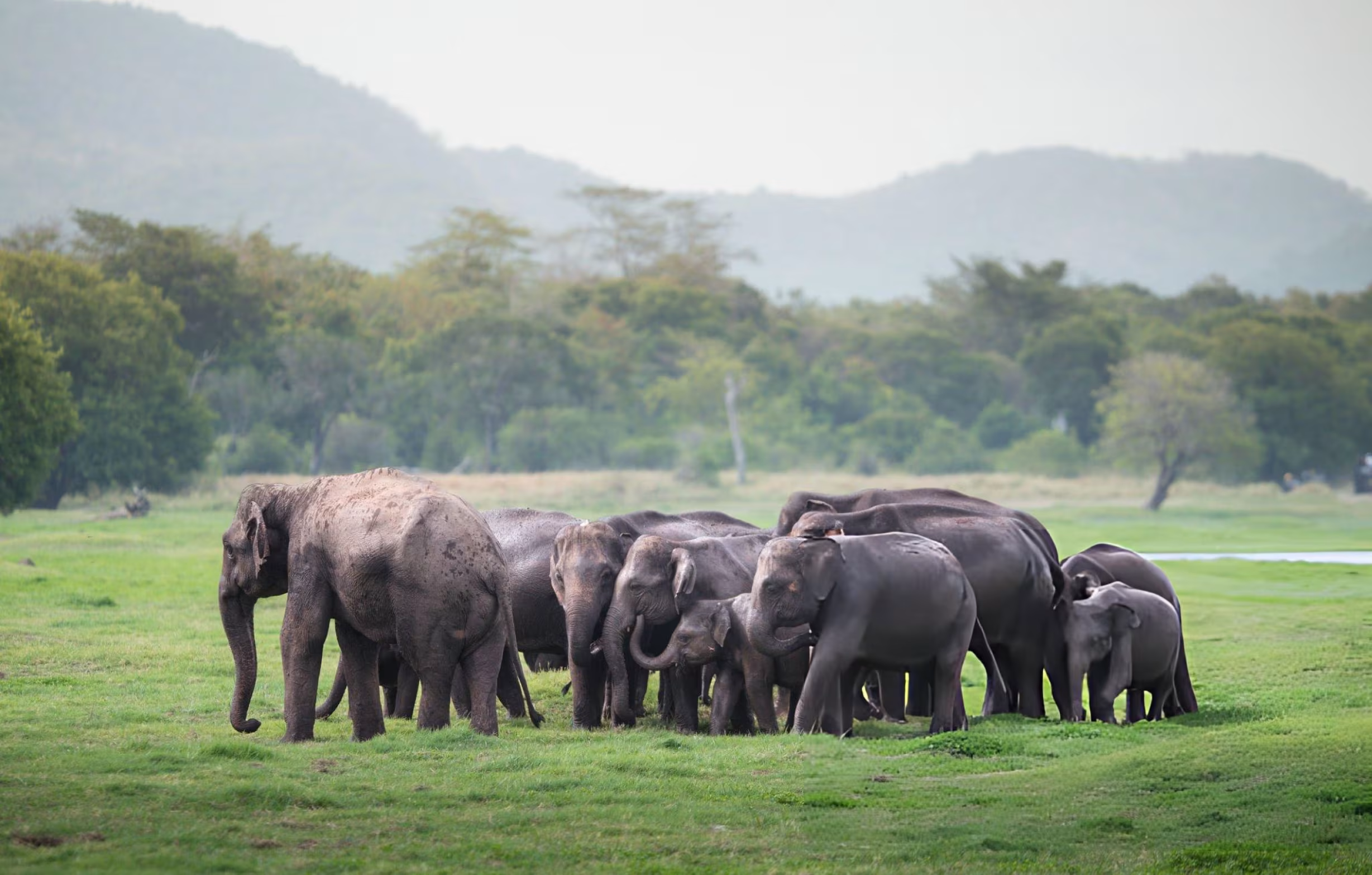
Minneriya National Park has gained reputation for hosting the larger peak gatherings, with some exceptional days during July-August producing concentrations of 300-400+ elephants around Minneriya Tank—truly breathtaking spectacles where the shoreline disappears beneath living masses of gray bodies. These maximum density gatherings create the most dramatic visual impact and photographic opportunities, with opportunities to observe complex social dynamics as multiple family groups interact in close proximity.
Kaudulla National Park typically hosts slightly smaller maximum gatherings in the 200-300 elephant range during peak season (August-September). While the raw numbers may be somewhat lower, the visual and experiential differences between 250 and 350 elephants prove relatively subtle—both represent extraordinary wildlife spectacles far exceeding what most safari destinations worldwide can offer. The slightly lower density at Kaudulla sometimes allows for better observation of individual family groups and specific behavioral interactions without the visual chaos of absolutely massive congregations.
However, these are maximum figures occurring during optimal conditions. On average days during peak season, both parks regularly host 100-200+ elephants—still spectacular numbers providing excellent viewing. The key insight is that both parks deliver extraordinary elephant experiences during their respective peak periods, with the difference in maximum gathering size being a secondary consideration compared to timing your visit to coincide with when either park is hosting good numbers.
Seasonal Timing Patterns
Understanding when each park peaks proves crucial for planning, as timing determines whether you witness spectacular gatherings or modest numbers:
Minneriya's peak gathering season runs July through early October, with absolute maximum concentrations typically occurring late July through August. During these months, Minneriya Tank's particular hydrological characteristics and grass growth patterns make it especially attractive to elephant populations. If your travel dates fall squarely within this window, Minneriya often (though not always) hosts the larger concentrations.
Kaudulla's peak gathering season runs June through September, with maximum numbers typically occurring August through early September. Kaudulla's gathering extends slightly earlier into the dry season than Minneriya's, making it often the better choice for June-July visits. By late September and into October, Kaudulla's gathering begins dispersing as early monsoon rains arrive, while Minneriya may maintain higher numbers slightly longer.
The overlap period (August-early September) represents the peak window when both parks host substantial gatherings simultaneously. During this time, the choice becomes less critical from a pure numbers perspective—both parks deliver spectacular experiences. This overlap window also provides the opportunity to visit both parks on consecutive days if your schedule allows, experiencing the distinct characteristics each offers while virtually guaranteeing excellent elephant viewing at both.
Off-peak months (October-May) see much smaller elephant numbers at both parks as populations disperse with monsoon rains replenishing water sources throughout the region. During these months, both parks maintain resident populations of 30-80 elephants, with neither offering significant advantage over the other. Off-season visits should be chosen based on other factors beyond elephant numbers since gathering spectacle won't be a differentiating factor.
Viewing Experience Quality
Beyond raw elephant numbers, the quality and character of viewing experiences differs subtly between parks:
Kaudulla tends to provide more intimate, peaceful elephant viewing with typically fewer safari vehicles competing for positions around elephant herds. The park's slightly less developed tourism infrastructure and reputation as Minneriya's "quieter alternative" means lower visitor numbers, particularly during weekdays and shoulder season. This creates opportunities for unhurried observation without pressure to quickly move on so other vehicles can view, and better photographic conditions without other jeeps intruding into frame backgrounds.
The park's terrain features more varied topography with rolling grasslands and scattered tree clusters creating diverse viewing contexts beyond just the tank shoreline. This variety allows for environmental portrait opportunities showing elephants against different landscape backdrops.
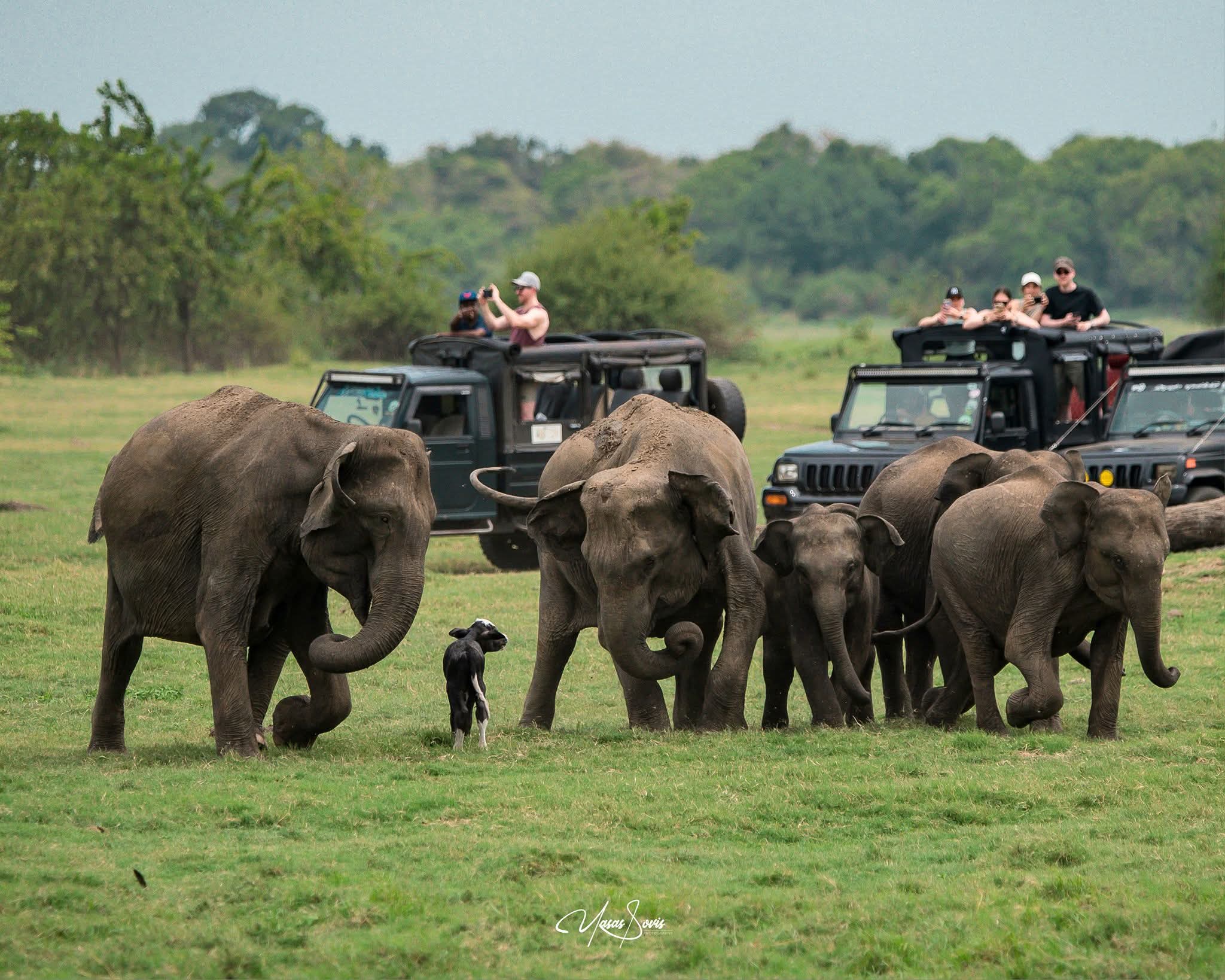
Minneriya delivers more dramatic, action-packed safari experiences during peak season when massive herds create constant activity and interaction. The sheer density of elephants during maximum gatherings means non-stop behavioral observations—something interesting happening in every direction you look. However, this drama comes with more safari vehicles (particularly on weekends and holidays), requiring patience and potentially strategic positioning to get clear views and clean photographs without other jeeps in frame.
Minneriya's flatter, more open terrain around the tank provides excellent visibility and clear sightlines to elephants, though sometimes at the cost of varied compositional opportunities that Kaudulla's more diverse landscape offers.

Wildlife Diversity Beyond Elephants
While elephants dominate both parks' reputations, other wildlife species create additional safari value and may influence your choice if you have interests beyond elephants.
Mammal Diversity
Both parks protect similar mammal communities including spotted deer (chital), sambar deer, wild water buffalo, wild boar, and various monkey species (toque macaques and gray langurs). These species appear with similar frequency at both locations, providing reliable secondary wildlife viewing opportunities beyond elephants.
Sri Lankan leopards inhabit both parks, though sightings remain rare at both locations compared to leopard hotspots like Yala National Park. Minneriya has slightly higher reported leopard sighting frequency, though the difference remains marginal—if leopard viewing is a priority, neither park represents an optimal choice compared to Yala or Wilpattu.
Sloth bears occasionally appear in both parks' forested areas, though encounters remain highly opportunistic and unpredictable. Neither park offers significant advantages for bear viewing.
The overall mammal diversity proves nearly identical between parks, with neither offering compelling advantages for non-elephant mammal viewing that would justify choosing one over the other based solely on this criterion.
Avian Richness
Bird diversity represents one area where subtle differences emerge, though both parks provide excellent birdwatching:
Kaudulla hosts over 160 recorded bird species with particularly strong populations of water birds including painted storks, spot-billed pelicans, lesser adjutant storks, and various heron and egret species congregating around the tank. The park's habitat diversity—mixing wetlands, grasslands, and forest—supports varied bird communities beyond just water species, including forest birds, raptors, and endemic Sri Lankan species.
Minneriya similarly boasts impressive bird populations (150+ recorded species) with comparable water bird concentrations and diversity. The park's slightly larger water body during peak seasons sometimes attracts marginally higher water bird numbers, though the difference proves difficult to detect without side-by-side comparison.
For serious birdwatchers, both parks deliver excellent opportunities with neither offering overwhelming advantages. The timing of your visit (resident vs. migratory bird seasons) likely matters more than park selection for birdwatching success.
Reptile and Other Wildlife
Mugger crocodiles appear in both parks' water bodies, most visible during dry season when they bask on exposed mudflats. Water monitors (large lizards) frequent both reserves. Various snake species inhabit both parks though remain largely invisible to safari visitors due to their cryptic nature and avoidance of human presence.
Again, neither park provides significant advantages for reptile viewing—both offer similar opportunities for crocodile observation and occasional monitor lizard sightings.
Park Characteristics and Safari Experience
Beyond wildlife populations, the physical characteristics and safari experience elements of each park differ in subtle but potentially meaningful ways.
Park Size and Layout
Kaudulla National Park covers approximately 6,900 hectares with the Kaudulla Tank occupying central position surrounded by grasslands transitioning to forest at park peripheries. The park's layout creates natural safari circuits around the tank and through adjacent habitats, with multiple routes offering varied perspectives and viewing opportunities.
Minneriya National Park spans approximately 8,890 hectares—roughly 30% larger than Kaudulla. The Minneriya Tank dominates even more of the park's area, creating extensive shoreline viewing opportunities. The larger size provides slightly more route variety, though in practical safari terms, the difference rarely matters as most game viewing concentrates around the tank areas in both parks.
Terrain and Landscape
Kaudulla's terrain features more topographical variation with gentle rolling grasslands, scattered rocky outcrops, and more pronounced forest zones creating diverse landscape contexts. This variety offers photographers more compositional options and environmental portrait opportunities showing elephants against varied backdrops.
Minneriya's terrain presents flatter, more uniform open grasslands around the tank, creating excellent visibility and clear sightlines but somewhat less landscape diversity for photography. The dramatic openness emphasizes the scale of elephant gatherings—massive herds visible across expansive grasslands create powerful visual impact.
Some photographers prefer Kaudulla's more varied terrain for creative opportunities, while others appreciate Minneriya's open simplicity for unobstructed wildlife viewing and clean compositions. Neither represents an objectively superior landscape—the preference depends on your photographic style and priorities.
Safari Routes and Viewing Areas
Both parks feature designated safari routes around main wildlife concentration areas (primarily the tank shorelines), with guides knowing optimal positioning for viewing and photography. Neither park allows walking safaris or exiting vehicles except at specific designated areas far from wildlife.
Kaudulla's slightly more varied terrain creates more route options through different habitat types, potentially offering more dynamic safari experiences. Minneriya's routes focus more intensively on the extensive tank shoreline, maximizing elephant viewing opportunities during gathering season.
Experienced guides at both parks communicate via radio about wildlife locations and movements, directing vehicles to areas with best current viewing. This real-time information network means that regardless of which park you choose, good guides will position you optimally for the wildlife present that day.

Visitor Numbers and Crowd Management
Tourism pressure represents a meaningful practical difference between these parks affecting your safari experience quality.
Comparative Visitor Volumes
Minneriya receives significantly higher visitor numbers than Kaudulla, driven by its reputation for hosting the "largest elephant gatherings" and prominent coverage in travel guides and wildlife documentaries. During peak season (July-September) and particularly on weekends and Sri Lankan holidays, Minneriya can feel crowded with 30-50+ safari vehicles converging around major elephant congregations.
This crowding doesn't necessarily ruin the experience—the park's size and multiple viewing areas usually allow spreading out somewhat, and the sheer drama of massive elephant herds often overshadows vehicle presence. However, photographers may find clean shots without other jeeps in frame more challenging, and the competitive atmosphere as vehicles jostle for positions detracts somewhat from the peaceful wilderness immersion many seek.
Kaudulla attracts notably fewer visitors despite offering comparable wildlife experiences. Even during peak season, you'll typically encounter 10-20 safari vehicles rather than 30-50+, creating more relaxed viewing conditions. This lower pressure means guides feel less rushed to move on from sightings, photographers have cleaner shooting conditions, and the overall experience maintains stronger wilderness character.
The visitor volume difference becomes most pronounced during weekdays vs weekends—choosing weekday safaris at either park reduces crowds, but Kaudulla maintains its quieter advantage even during busy periods.
Impact on Experience Quality
For many travelers, particularly photographers, families with children, or anyone prioritizing peaceful nature immersion, Kaudulla's lower visitor numbers represent a significant practical advantage outweighing Minneriya's marginally larger maximum elephant gatherings. The ability to observe wildlife without constant awareness of dozens of other vehicles creates more intimate, authentic safari experiences.
However, some travelers find the energy and excitement of busy Minneriya safaris during peak season enhances rather than detracts from their experience—the sense of witnessing something extraordinary alongside other enthusiastic wildlife lovers creates shared excitement. This becomes more subjective preference than objective quality assessment.
If avoiding crowds is a high priority, Kaudulla clearly wins this comparison. If crowds don't significantly concern you, Minneriya's larger gatherings may justify accepting the busier conditions.
Accessibility and Logistics
Practical access considerations affect trip planning and may influence your park choice based on your itinerary and base location.
Geographic Location and Distance
Both parks sit in the North Central Province near the town of Habarana, which serves as the primary base for safaris to either park. From Habarana:
- Kaudulla entrance: approximately 10 kilometers south (15-20 minute drive)
- Minneriya entrance: approximately 20 kilometers east (25-30 minute drive)
Kaudulla's slightly closer proximity to Habarana provides marginal convenience advantages for early morning safari departures requiring less travel time, though the 10-minute difference rarely proves decisive.
From Polonnaruwa (40 kilometers northeast of Habarana), Minneriya sits slightly closer, though both parks remain reasonably accessible. From Sigiriya (15 kilometers west of Habarana), Kaudulla is marginally closer.
The geographic proximity means visiting both parks across multi-day stays is easily achievable—alternating days between Kaudulla and Minneriya safaris creates varied experiences while maintaining the same accommodation base in Habarana.
Integration with Cultural Triangle Tours
Both parks integrate seamlessly into cultural triangle itineraries combining wildlife safaris with visits to UNESCO World Heritage sites including Sigiriya Rock Fortress, Polonnaruwa Ancient City, and Dambulla Cave Temple. The parks' central location within the cultural triangle makes them convenient additions to heritage-focused tours.
Neither park offers significant advantages for cultural integration—both work equally well in combined itineraries. Trip planning should focus on optimizing overall route efficiency rather than choosing parks based on cultural site proximity, as distances remain manageable throughout this compact region.
Safari Operator Availability
Both parks benefit from extensive safari operator presence in Habarana, with numerous jeep rental companies and guides serving both destinations. Booking quality safaris proves equally straightforward for either park, with similar availability, pricing, and service quality.
Most hotels and guesthouses in Habarana can arrange safaris to either park, often asking which you prefer rather than pushing one over the other. During peak season when Minneriya becomes crowded, some operators may recommend Kaudulla to distribute visitor pressure and provide better experience quality—this flexibility represents one advantage of staying in Habarana rather than locations closer to one specific park.
Cost Comparison
Safari costs factor into practical decision-making, though differences between parks prove relatively minor.
Park Entrance Fees
Park entrance fees set by Sri Lanka's Department of Wildlife Conservation show slight variations:
- Kaudulla: Slightly lower entrance fees for foreign visitors (typically $3-5 USD less per adult)
- Minneriya: Marginally higher entrance fees
These modest differences ($10-20 USD total for a family of four) rarely represent decisive factors in park selection, though budget-conscious travelers should note Kaudulla's cost advantage.
Safari Vehicle and Guide Costs
Jeep rental and guide fees remain essentially identical between parks, as most operators serve both destinations with standardized pricing. Half-day safari (3-4 hours) jeep rental plus guide costs the same regardless of which park you visit, though exact amounts vary by operator, season, and negotiation.
Full-day safaris or specialized photography-focused tours command premium rates at both parks equally.
Accommodation Costs
Accommodation costs in Habarana (the primary base for either park) obviously remain identical regardless of which park you choose, as you're staying in the same location. The only accommodation cost consideration emerges if you choose to stay closer to one specific park rather than in central Habarana—properties immediately adjacent to park entrances may offer minor convenience advantages but rarely significant cost differences.
Overall Cost Assessment
Total safari costs prove virtually identical between parks, with Kaudulla offering marginal advantage through slightly lower entrance fees. However, this minor cost difference shouldn't drive your decision—choose based on the experience characteristics you prioritize, as the cost differential won't meaningfully impact your budget.

Making Your Decision: Which Park to Choose
Synthesizing all comparison dimensions, here's decision-making guidance based on different traveler profiles and priorities:
Choose Kaudulla If You:
- Value peaceful, uncrowded experiences and want to avoid the safari vehicle congestion common at Minneriya during peak season
- Are serious photographers prioritizing clean shots without other vehicles in frame and unhurried time at interesting sightings
- Visit during early dry season (June-July) when Kaudulla often hosts better elephant concentrations than Minneriya
- Prefer more varied terrain and landscape diversity for photography and environmental portraits
- Want the quieter, more intimate alternative while still experiencing spectacular elephant gatherings
Choose Minneriya If You:
- Want to witness the absolute largest possible elephant gatherings and are visiting during peak July-August window
- Visit during late dry season (September-early October) when Minneriya often maintains gatherings longer than Kaudulla
- Don't mind busier safari conditions with more vehicles and actually enjoy the excitement of shared wildlife viewing experiences
- Prefer maximally open terrain with clearest possible visibility and sightlines to elephants
- Want to visit the more famous, heavily documented park featured in wildlife documentaries
Consider Visiting Both Parks If You:
- Have 3+ days in the cultural triangle allowing time for multiple safaris
- Are serious wildlife photographers wanting varied landscape contexts and maximum shooting opportunities
- Visit during the peak overlap period (August-early September) when both parks host excellent gatherings simultaneously
- Want to personally compare these two excellent but subtly different parks
- Simply love elephants and want to maximize your wildlife viewing opportunities in this remarkable region
Practical Strategy: Dynamic Decision-Making
Perhaps the most sophisticated approach involves dynamic decision-making based on current conditions rather than pre-committing to one park:
When you arrive in Habarana, consult with your accommodation provider or safari operator about which park currently hosts better elephant numbers. Experienced local guides monitor both parks daily through their guide networks, knowing where elephants are concentrating in any given week. This real-time intelligence often proves more valuable than generalized seasonal patterns.
Book your first safari to whichever park currently offers better viewing. If you have time for multiple safaris, visit the other park subsequently, experiencing both while ensuring your first safari targets the location with best current conditions.
This flexible approach requires avoiding pre-booking safaris far in advance in favor of arrangements made upon arrival. However, during peak season (particularly July-September), advance booking may be necessary securing vehicles and guides, reducing flexibility for this dynamic strategy.
The Combined Experience: Best of Both Worlds
For travelers with adequate time, the combined Kaudulla-Minneriya experience provides the richest appreciation of this unique elephant gathering ecosystem:
Two-park itinerary (3-4 days in cultural triangle):
- Day 1: Arrive Habarana, afternoon safari at Park A
- Day 2: Morning safari at Park A, afternoon cultural sites (Sigiriya)
- Day 3: Morning safari at Park B, afternoon cultural sites (Polonnaruwa)
- Day 4: Morning safari at Park B, depart
This schedule provides four safari experiences across both parks, time for major cultural attractions, and comprehensive exposure to the region's wildlife and heritage.
Some operators offer two-park safari packages visiting both Kaudulla and Minneriya in single full-day excursions (typically 10-12 hours including travel time). While ambitious, these packages work well for travelers with limited time wanting to experience both parks, though the lengthy duration may prove exhausting.
The ultimate insight is that you cannot make a wrong choice between these two remarkable parks. Both provide extraordinary elephant viewing during appropriate seasons, protect fascinating wildlife communities beyond elephants, offer professional safari services, and integrate seamlessly into cultural triangle itineraries. The "best" choice emerges from understanding your specific priorities—crowd tolerance, photography ambitions, schedule constraints, and timing—rather than one park objectively surpassing the other. Whichever you choose, or ideally experiencing both, you'll witness one of Asia's most spectacular wildlife phenomena: hundreds of wild elephants gathering around ancient reservoirs in a tradition spanning millennia, creating memories that define exceptional wildlife travel experiences.